Christmas Quilt Patterns: Six Project Types and How to Choose
There are six kinds of Christmas quilt projects most people actually sew, and choosing the right one for your time and skill matters more than finding the prettiest picture. Pick a project that is too big and it becomes next year's project. Pick one that fits your weeks, and it is on the wall in time to be admired.
Here is how each type works, what it costs you in time, and where a PDF pattern with printable templates makes the difference.
1. Tree wall hangings
A tree wall hanging is the most popular beginner holiday project, because it is small, decorative and fast. Designs vary: pieced triangle trees, appliqued trees on a plain background, and layered tier trees.
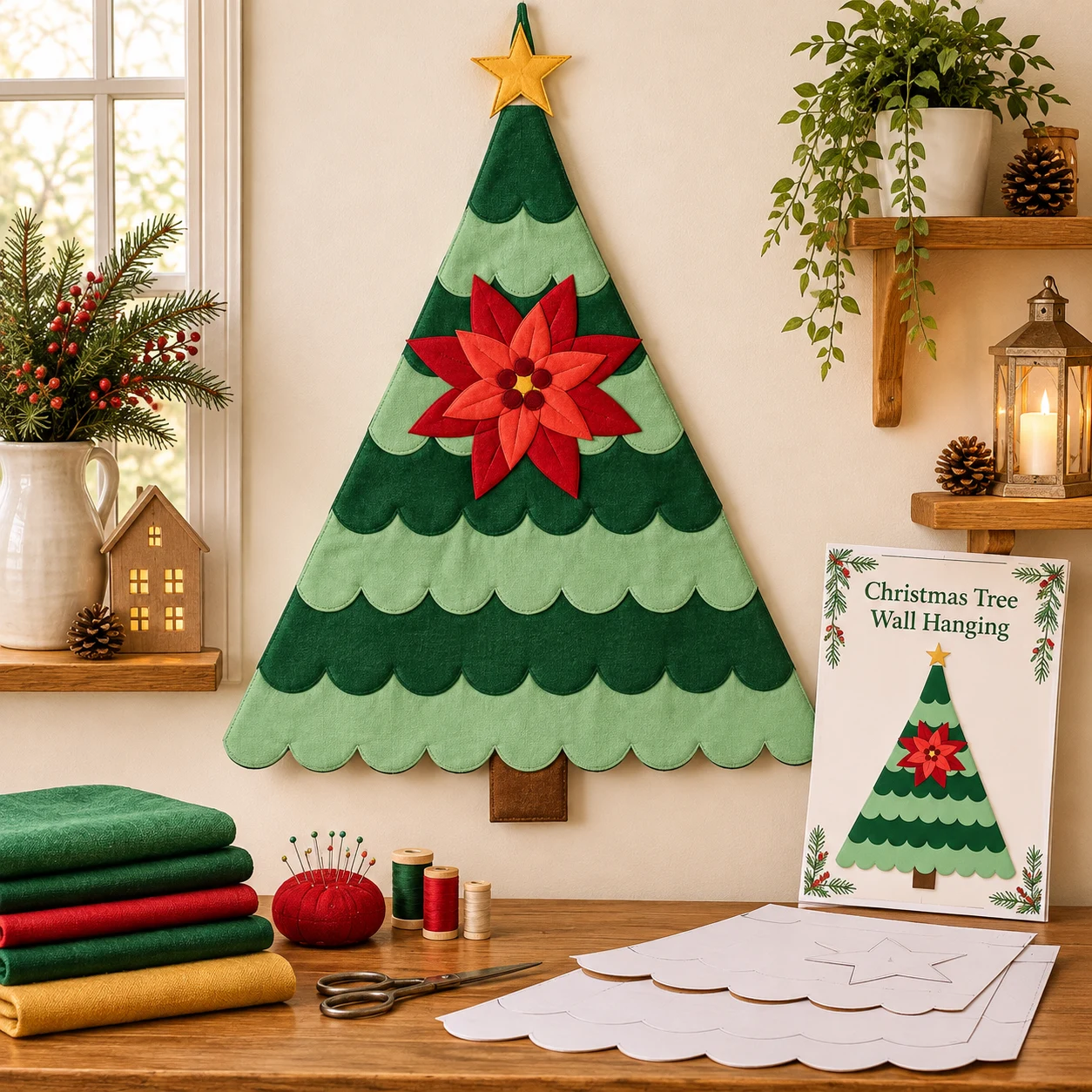
The layered style uses overlapping scalloped tiers instead of seams. The Christmas Tree Wall Hanging Pattern is built this way: eight tiers on an 18 x 28 inch tree, a trunk, an optional star and a layered poinsettia in the middle. Because tiers overlap, you do not have to match points, and the stitching that holds each tier also quilts the piece.
Time: a weekend. Skill: confident beginner. Why people choose it: it looks bigger than the effort it takes.
2. Table runners and toppers
A Christmas table runner turns a bare table into a holiday table. Patterns range from simple strip-pieced runners to appliqued ones with holly or stars.
Runners are long, so consider the batting and quilting time. A table topper is square and usually easier to handle. If you want a runner but are not sure about quilting a long piece, try a short tree wall hanging first; many of the same skills (layering, edge stitching, binding) carry over.
Time: two to four weekends. Skill: beginner to intermediate.
3. Tree skirts
A quilted tree skirt is a showpiece. It is also one of the more demanding projects: you work with a circular shape, radial seams or wedges, and a center opening. Binding the outer curve and the opening needs patience.
If you want a matching set, it helps to start with a wall hanging, then move to a skirt in the same fabrics. That way you already know your colors work together.
Time: two to three weekends. Skill: intermediate.
4. Ornaments and small decorations
Quilted ornaments are a good way to use scraps. They are small enough to finish in an evening, and they work as gifts. Patterns can be felt, pieced or appliqued, and are usually based on a few simple templates.
Because they are so small, accuracy of the template matters. If a pattern says 3 inches wide and your print is 90 percent, your ornament will look off. That is why a control square on each template page is useful.
Time: one evening each. Skill: beginner.
5. Door hangers and mini hangings
A door hanger is a miniature wall hanging with a loop for a hook. It uses the same skills as a full wall hanging, in less fabric. Mini versions of a tree or a star are a good first project or a quick gift.
Time: an evening or two. Skill: beginner.
6. Bed quilts and lap quilts
A full Christmas quilt is a long project. Designs use repeated blocks, rows of trees or patchwork stars. They are lovely, but they take weeks or months and need space to baste and quilt.
If you plan to make one for next year, you can start now with a smaller project to test your fabric choices.
Time: weeks to months. Skill: intermediate and up.
How to choose
| Question | If yes |
|---|---|
| Is the holiday within a month? | Wall hanging, ornaments or door hanger |
| Do you want something that looks impressive on a wall? | Tree wall hanging |
| Is this your first quilt? | Layered applique tree, no piecing |
| Do you love piecing and have time? | Pieced blocks or a bed quilt |
| Do you want gifts? | Ornaments or minis |
For a first project, the simplest route is a small hanging with full-size templates and numbered steps. See Christmas quilt patterns for beginners for a longer look at what makes a pattern easy to finish.
What a good quilt pattern PDF includes
A PDF pattern is only as good as what is in it. Before you buy, check for:
- A stated finished size. Not "wall hanging size", but inches or centimeters.
- Full-size templates in your paper size. US Letter and A4 are standard. The pages should tile and carry a scale check.
- A materials list with backing, batting and binding. Not only the top fabrics.
- Instructions in order. Cutting, assembly, quilting, binding and hanging.
- A choice of techniques if you are new, such as raw-edge, turned-edge or fusible applique.
- Personal-use terms. Know what you can and cannot do with the pattern.
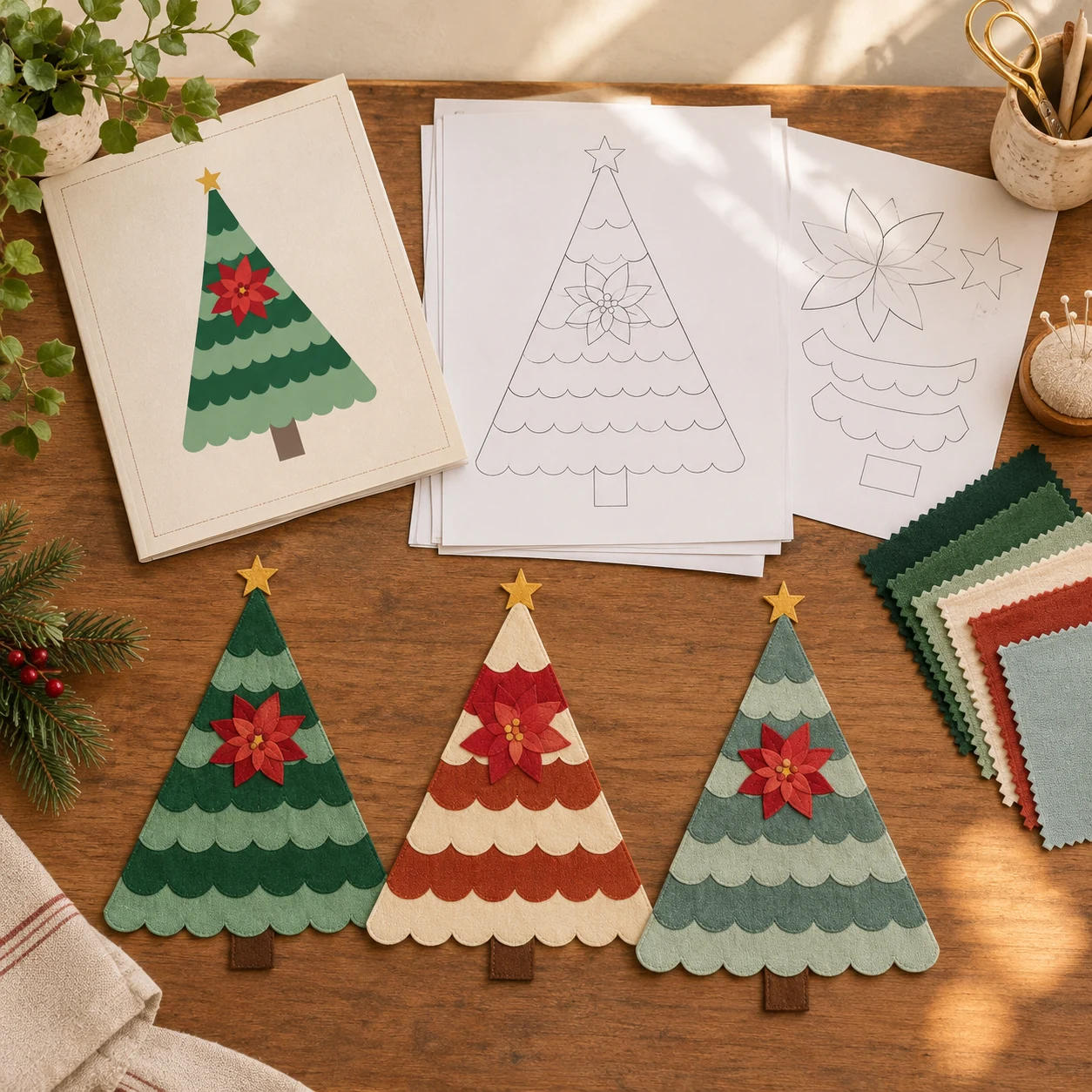
The Christmas Tree Wall Hanging Pattern has 12 pages of instructions, an assembly map, 15 template shapes producing 36 cut pieces, a mini size, three colorways and a materials chart. It is a PDF you print at home, with no physical product shipped.
Choosing fabrics for any Christmas quilt
Whatever you sew, three decisions shape how it looks:
- Value contrast. A dark and a light fabric next to each other read clearly. Take a grayscale photo to check.
- Print scale. Large prints get lost in small shapes. Small prints read like solids and help calm a busy design.
- One strong accent. A red poinsettia, a gold star or a ribbon of cream makes a quilt feel finished.
For ideas on color combinations, see the scrappy tree version, or compare tree designs to see whether pieced blocks or layered tiers suit you.
The short answer
If you want one project to sew this season, choose a small tree wall hanging with printable templates. It takes a weekend, it looks great on a wall, and it teaches the skills you will need for every other Christmas project on this list.
This guide is general information. Patterns are for personal use unless stated otherwise.