Best Fabric for Bag Making: What Works for a Round Bag
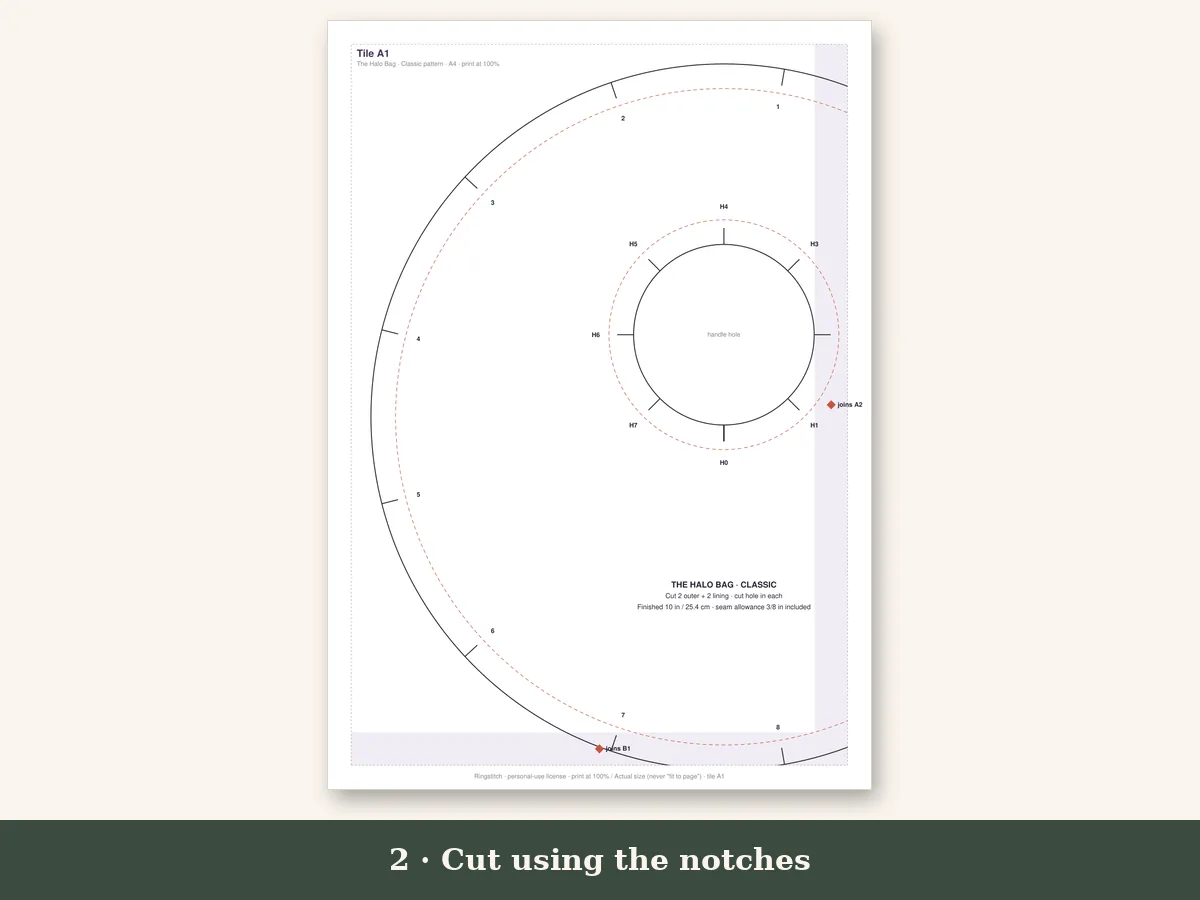
A bag is only as good as the fabric you give it. The same pattern in a stiff canvas and in a flimsy cotton gives two very different bags. For a round bag, with a curved seam and a handle opening, the choice matters more than usual: too thick and the curve is hard to turn, too thin and the bag slumps. This guide covers the fabrics that work, how to support them and how to choose for the Mini, Classic and Tote sizes in Ringstitch · The Halo Bag Sewing Pattern from Ringstitch.
What a bag needs from a fabric
Three qualities decide whether a fabric suits a bag.
Body. The fabric, or the fabric with interfacing, must hold a shape. Floppy bags look homemade.
Durability. A bag is handled, rubbed and loaded. Tightly woven fabrics resist wear and fraying.
Workability. The fabric must feed through a machine, take a crease and turn cleanly. Fabrics that fray, slip or stretch too much are harder.
Fabrics that work
Canvas and duck cloth
The workhorse. A medium-weight cotton canvas has body, takes a press and wears well. It is good for the Classic and Tote. Pre-wash it, as canvas can shrink. Heavier duck cloth is stiff and may be hard to turn on a small curve, so use it for the larger sizes.
Linen and linen blends
Elegant and breathable, with a natural texture. Linen wrinkles and needs interfacing to hold a round shape. A linen blend is easier to care for.
Corduroy
Soft, structured and warm. A fine or medium wale is easy to sew and looks rich on a round bag. Cut all pieces in the same direction so the nap matches.
Quilting cotton
Available in thousands of prints and easy to handle. Alone it is light, so pair it with fusible interfacing or fleece. It is the friendliest choice for a Mini and for beginners.
Denim
Tough and casual. Use a lighter weight, such as chambray or a soft denim. Use a heavy needle and sew slowly at layered seams.
Velvet and velveteen
Luxurious, with a slippery pile. Use clips instead of pins, a walking foot and a pressing cloth. Cut with the nap in one direction. Gorgeous for a holiday Mini.
Waxed cotton and coated fabrics
Water resistant and robust, but needles leave permanent holes and pressing is limited. Not a first choice.
Faux leather and vinyl
Strong, but sticky under a presser foot. Use a Teflon foot or tissue. Not recommended for curves with a tight radius.
Fabrics to avoid for a first round bag
- Stretchy knits, which distort the curve.
- Slippery satins and chiffons, which creep as you sew.
- Very thick upholstery fabrics, which are hard to turn.
- Loosely woven fabrics, which fray and gape.
Interfacing: the secret to structure
Interfacing is a layer, fused or sewn, that adds body. For a round bag it does three jobs: it holds the circle round, it supports the handle opening and it prevents the curve from stretching.
- Lightweight fusible for quilting cotton on a Mini.
- Medium fusible or woven for linen and canvas.
- Fleece or foam for a padded, quilted look.
Fuse the interfacing to the wrong side of the outer panels and trim it out of the seam allowance if the tutorial advises. Follow the manufacturer's heat and time, and let it cool before moving the piece.
The lining
The lining is the inside of the bag and the place to have fun. Choose a fabric of similar weight to the outer or slightly lighter. Quilting cotton is the standard. A contrasting color or print makes the inside easy to find things in. Wash the lining before cutting if you plan to wash the bag.
Matching fabric to size
| Size | Suggested outer | Support |
|---|---|---|
| Mini | Quilting cotton, corduroy, velvet | Lightweight to medium fusible |
| Classic | Canvas, linen blend, corduroy | Medium fusible |
| Tote | Heavy canvas, denim, furnishing fabric | Medium to heavy interfacing |
How much to buy
The cutting and yardage sheet that comes with the pattern lists the fabric needed for each size and shows how to lay out the pieces. Because a circle placed carelessly wastes fabric, the layout can save you a surprising amount. Buy a little extra for mistakes and for matching a print.
Prepping the fabric
Pre-wash and dry the fabric the way you will care for the finished bag. Iron it flat. Interface the pieces after cutting. Test your needle and stitch length on a scrap with the same layers as the bag, including the interfacing.
Hardware and trims
Straps, rings, clips and magnetic closures change the character of a bag. They are covered in a separate Straps and Hardware Guide (sold separately). Webbing in a coordinating color is a simple way to add a polished strap.
A final check
Before cutting, drape the fabric over your hand. Does it hold a curve? Does it spring back? If it flops, add interfacing. If it feels like cardboard, choose a lighter fabric for the curve. A good bag fabric feels slightly more structured than you expect, because sewing and turning always soften it a bit.
Fabric pairings that always work
Some combinations are reliable enough to copy. A mustard corduroy outer with a floral cotton lining. A natural canvas outer with a bright striped lining. A navy linen blend with a white lining and tan webbing. A black velvet Mini with a gold-print lining for the holidays. A denim outer with a red polka dot lining. When you build a pairing, keep one of the two fabrics quiet: a bold print on both sides competes with itself, while a solid outside with a busy inside feels intentional and polished.
Caring for a handmade bag
Wash the fabrics before you sew so shrinkage happens before the bag exists. Once made, spot-clean the outer with a damp cloth. If the lining is cotton, you can often wash the whole bag gently by hand and reshape it while it dries, but fusible interfacing may bubble if it is too hot, so test a scrap first. Store the bag stuffed with tissue or a small towel to keep its round shape between uses. These small habits make a bag you sewed last for years.
Sustainable and scrap choices
A round bag is a fine use for fabric you already own. Cut the Mini from remnants, patch together a panel from several scraps, or reuse a pair of corduroy trousers or a canvas tablecloth. Pre-loved fabric has a soft hand and a story, and it costs little. Check the weave for thin patches before you cut, and add interfacing where the fabric is worn.