Bag Sewing Patterns to Sell: Check the License First
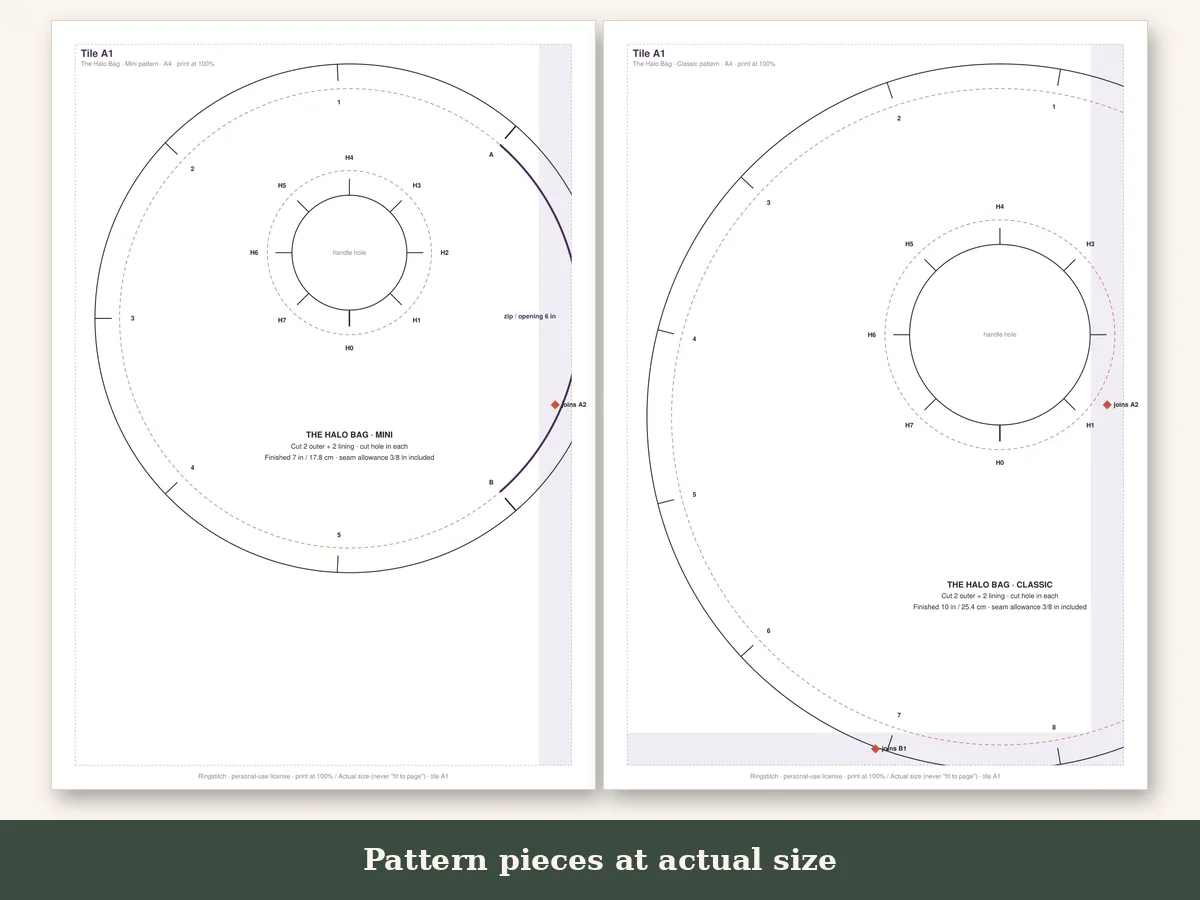
If you are thinking about selling the bags you sew, the license on your pattern matters before the fabric does. Many sewists discover the rules after a market day or an Etsy listing. This guide explains the common license types, what to look for and how to plan a small batch of bags so you sell with confidence. It uses Ringstitch · The Halo Bag Sewing Pattern from Ringstitch as the example, whose standard license is for personal use.
Personal use vs commercial use
A personal-use license lets you make items for yourself, family and gifts. It usually does not let you sell what you make, and it never lets you share or resell the pattern file.
A commercial license lets you sell finished items made from the pattern, often up to a limit and sometimes with credit to the designer. Terms vary a lot: some limit the number, some require a credit line, some ban mass production.
The Halo Bag pattern is for personal use: you may not share, resell or redistribute the files. A small-batch commercial license, with a pricing sheet, printable hang tags and product-listing templates, is offered separately (sold separately). It organizes your work; it does not promise sales or income.
Why this matters
Designers spend weeks drafting, testing and grading a pattern. Selling finished items without permission undercuts that work and can lead to removal of a listing or a dispute on a marketplace. Checking the license first protects you and respects the person who made the pattern.
What to read in a license
- Does it allow selling finished items? Look for words like "commercial use," "small batch" or "sell finished products."
- Is there a limit? Some licenses allow a number of items per year.
- Is credit required? Many ask you to mention the designer when you list.
- Can you sell online and at markets? Some restrict channels.
- Does it cover the pattern file? It never does. You cannot sell or share the pattern.
If anything is unclear, ask the designer before you list.
Planning a small batch
A small batch is a handful of bags made in a run. It is the sensible way to test whether people want what you make.
- Choose two or three fabrics that suit your style and are available in enough yardage.
- Pick one size to start. The Classic is the most versatile. A Mini is fast and gives a lower price point.
- Make a sample. Sew one and photograph it. Fix any problems before you repeat.
- Batch the steps. Cut all pieces at once, interface all at once, then sew in a line. Batching saves a lot of time.
- Track your costs. Fabric, interfacing, thread, hardware, packaging and your time.
Pricing a handmade bag
Price on costs and time, not on guesses. Add up the materials per bag. Decide an hourly rate for yourself. Multiply by the hours a bag takes, including cutting, pressing and finishing. Add packaging and any fees from the marketplace. That is your floor. Then look at what comparable handmade bags sell for and place yours with an honest sense of quality.
A printable pricing sheet makes this simpler by giving you a form to fill in. The sheet is part of the separate commercial package. Prices that cover your time keep the work sustainable. Underpricing is the most common mistake of new makers.
Presenting your bags
Good photos sell. Shoot in natural light on a clean background, show the bag from the front and side, and add a lifestyle shot with the bag in use. Show the inside. Describe the fabric, size and care instructions. Add hang tags that carry your brand name.
For marketplace listings, tags and titles matter for visibility. Our guide to Etsy tags for craft listings covers how to choose them.
Keep it honest
Describe materials accurately. Do not use another designer's name in a way that suggests affiliation. Do not claim guaranteed results from selling. Sewing to sell is a way to try something you enjoy, and some makers find it rewarding while others prefer to sew for themselves.
Making it sustainable
Keep batches small enough that you still enjoy the work. Track which bags sell and make more of those. Reorder fabric based on real sales, not hopes. Make a few to stock and take custom orders for the rest. Small, steady and enjoyable beats big and exhausting.
Starting with the pattern
Before you sell anything, make the bag for yourself. Learn the Clip-Curve method on a Mini and a Classic. Get comfortable with the cutting and yardage sheet. When your bags look consistent and you can make them without the tutorial, you are ready to think about a batch and a license.
A sample week of making
Suppose you plan eight Classic bags. Monday evening: print the pattern, check the test square and cut paper pieces. Tuesday: cut all the outer, lining and interfacing pieces in one session, labeling bundles by fabric. Wednesday: fuse interfacing and transfer notches. Thursday and Friday: sew outers, then linings, one stage at a time. Saturday morning: clip, turn, press and topstitch. Saturday afternoon: photograph and write listings. Batching by stage means you do each skill once instead of eight times, and the quality becomes more consistent as you repeat each step.
Packaging and labels
Presentation adds value. Wrap each bag in tissue, add a hang tag with the fabric and care details and include a small thank-you note. Printable hang tags with space for your brand name are part of the commercial package (sold separately), or you can make your own. Keep packaging light, so shipping stays affordable, and mention the care instructions so customers know how to keep the bag in good shape.
Where people sell handmade bags
Common routes are local craft markets, online marketplaces, your own small shop and direct orders from friends and family. Each has different fees and customers. Markets give instant feedback, because you can watch people pick up a bag. Online listings reach more people but need good photography and clear descriptions. Start with one channel, learn what works and add another when you have the capacity. Keep notes on which bags and fabrics people ask about, because that tells you what to make next.